|
Tech Talk
courtesy of
(http://hometown.aol.com/skyking366/index.html) is
provided in an effort to enhance safety in our aging flock, share
techniques for improving performance and handling, and disseminate the
accumulated wisdom from over 16 years of B1-RDing. The first offerings:
immediately below is the Annual Inspection Guideline, originally published
in B1-RD Droppings #3 published May/June 1985.
Click here for to read How to Rig Your B1-RD from B1-RD Droppings #2
published March 1985.
ANNUAL INSPECTION OUTLINE
We've had a lot of questions concerning maintenance of the B1-RD with
the emphasis
|
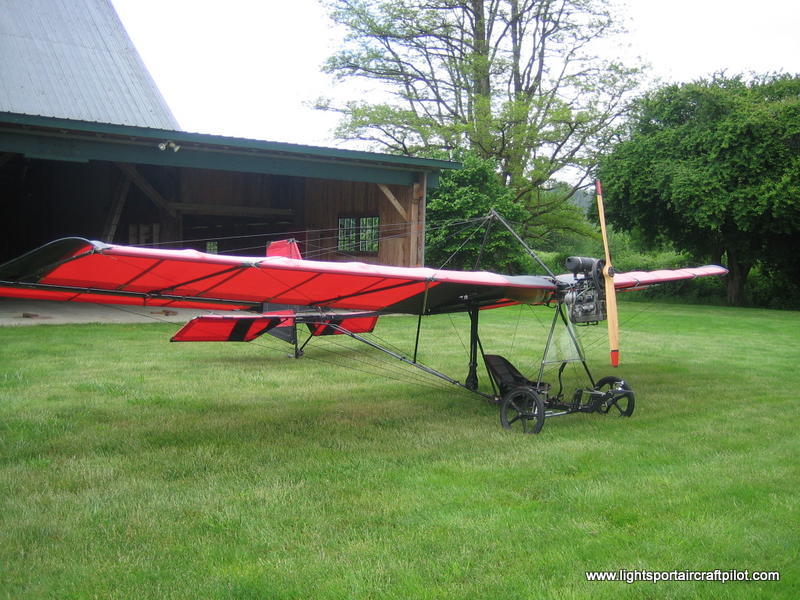
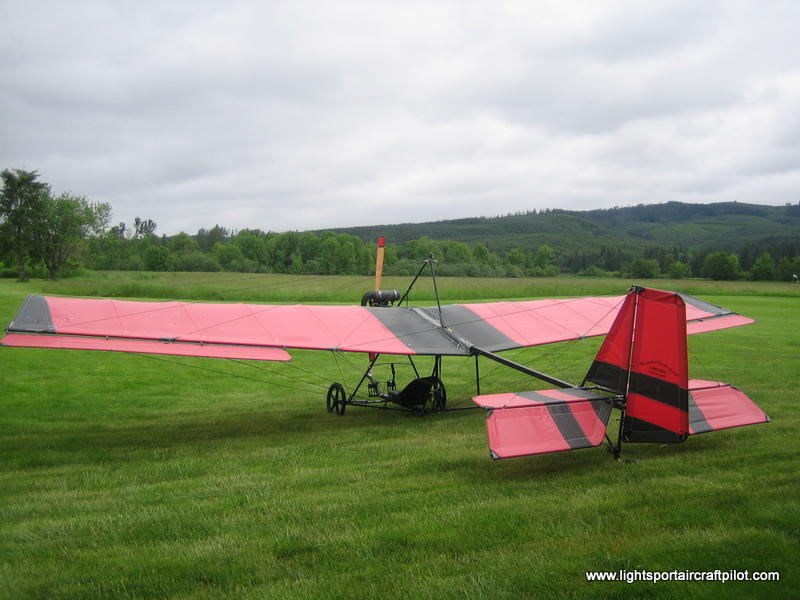
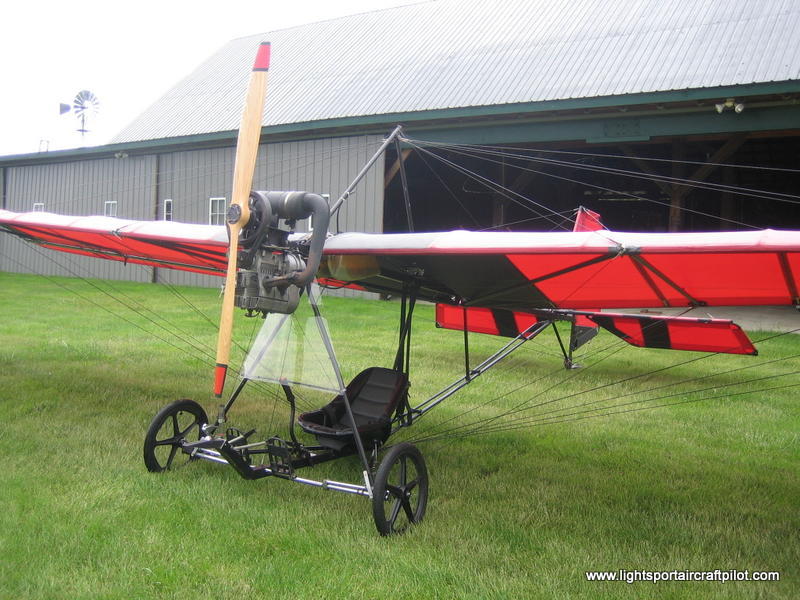
B1-RD ultralight specifications |
|
Empty Weight: |
220 lbs. |
| Gross Weight: |
500 lbs. |
| Wing Span: |
32 ft. |
| Wing Area: |
162 sq ft. |
| Engine:
|
430 Cayuna |
| Cruise Speed: |
38 mph |
| Stall Speed: |
15 mph. |
| VNE: |
50 mph. |
| Construction: |
aluminum tube and fabric |
| Building time: |
|
For additional information check
out:
http://hometown.aol.com/skyking366/index.html |
on what to look for specifically to keep flying safely.
With that in mind we're going to run through a quick guide to proper
inspection.
An annual inspection implies a yearly look over of the airframe. What
it really means is a thorough inspection and tear down to determine
if the aircraft is still in airworthy condition. It is not a pre-flight,
in that you look at all the operational systems to assure proper function
and integrity. It is a deliberate attempt to find fault with the craft
and to repair anything that is less than perfect.
Don't attempt to perform this operation in one afternoon with the
aircraft out on the grass. I done right you will inevitably find
something that needs replacing, even if it's just a bolt, and you won't
have it. Find a nice dry hanger you can use for a couple of days and take
your time.
This checklist is intended as a guide only and is not intended to be
all-inclusive. It is your responsibility tomake sure everything is looked
at and that the aircraft is completely airworthy.
Note Inspection of any assembly not plainly visible will require some
disassembly. Any part of bolt not easily seen with a flashlight must be
exposed for proper inspection.
B1-RD ANNUAL INSPECTION GUIDELINE
FLIGHT CONTROLS
1. Control Stick - Remove and inspect control stick assembly. Check
for bent bellcranks and worn rod ends.
2. Aileron Control Cables - Inspect for fraying, kinks and wear.
3. Rudder Control Cables - Inspect for fraying, kinks and wear.
2-place B1-RDs should have new heavy-duty cables installed.
NOTE: Do not wash internal lubricant from control cables.
4. Elevator Push Rod - Inspect for straightness, wear, cracks and
security of the rod ends.
5. Rudder Pedals - Check for binding and security of the return
springs.
6. Ailerons - Inspect for security of hinge points, structural
integrity, and loose fasteners. Lubricate hinge points.
7. Elevator - Inspect for security of hinge points, structural
integrity, and loose fasteners. Lubricate hinge points.
8. Rudder - Inspect for security of hinge points, structural integrity,
and loose fasteners. Lubricate hinge points.
9. Rigging (flight controls) - Inspect all control cable installations
for binding, wear spots or mis-alignment.
FLYING WIRES
1. Cables - Inspect all flying wires for frayed spots, kinks, or
damaged sections. Cable should exit swagged on fittings cleanly, with no
kinks or loose wires visible. Its possible the able coating may not reach
all the way to the fitting. This is not usually a concern as the coating
sometimes shrinks with age and will pull away from the fitting.
2. Turnbuckles - Inspect for correct thread engagement, corrosion and
proper safety wiring
3. Cable Attach Tangs - Check for cracks or elongation. Inspect all
clevis pin and cotter pin installations. Replace any rusty cotter pins.
4. Rigging - Inspect for proper cable tension. Aircraft will usually
need a thorough re-rig at the conclusion of the annual. See B1-RD
Droppings #2 for rigging hints.
SAILS
1. Sail Surfaces - Inspect for fabric deterioration, loose stitching
and evidence of damage. Signs of sail deterioration begin at the highly
stressed areas such as the tensioning grommets at the corners of the
sail. If these stress points are tearing out and the color is noticeably
faded you can consider the sail as ready to replace. We are currently
working on a sail strength test kit that should take the guesswork out.
Call for info.
2. Battens - Inspect for damage and general contour. Battens should be
matched side for side, and should be over-curved slightly at their forward
30% for added sail tension. Make sure the battens haven't chafed through
their pockets into the spars.
3. Control Surfaces - Check general fit and condition of sail. Tail
surfaces must be as tight as possible for proper aircraft performance.
LANDING GEAR
1. Wheels and Tires - Check for damage and proper inflation.
2. Wheel Bearings - Check for wear and lubrication. The best lube for
nylon wheel bearings we've found is anti-seize compound usually used on
auto exhaust system fasteners. Ball bearing wheel bearings should be
available by the time you read this.
3. Swing Arms - Inspect for wear and damage. Bent swing arms can
usually be straightened if the bend is mild. Lubricate hinge point.
4. Bungee Cord - Inspect for damage, rot and even tension. Correct
tension gives movement when rolling over irregularities but not when pilot
sits in machine.
5. Main Axle Assembly - Inspect for bends, cracks, hole elongation,
corrosion or other evidence of damage. Inspect security of all weldments.
AIRCRAFT STRUCTURE
1. Wings - Inspect tubs and attach channels for cracks, dents, bends,
abrasions, corrosion, hole elongation or any other sign of damage.
Inspect all fasteners for distortion, rust and integrity.
NOTE: Tubes sealed with end caps (even if only on one end) tend to
hold moisture and accelerate fastener corrosion. Throw the end caps away
and remove and inspect any fastener that you cannot see directly.
2. Fuselage and Keel - Inspect tubes, fittings, and attach channels for
cracks, bends, corrosion, finish, hole elongation and evidence of any
other damage. Inspect all fasteners for distortion and security.
3. Tail Section - Inspect tubes, brackets, and attach channels for
cracks, bends, corrosion, finish, hole elongation, and evidence of any
other damage. Inspect all fasteners for distortion and security.
4. Harness System - Inspect for damage or cracking. Inspect attach
hardware for integrity. Clean only with mild soap and water. Wax the
latch parts to eliminate rust.
5. Seat Assembly - Inspect for damage or cracking. Inspect attach
hardware for integrity.
POWER PLANT
1. Propeller - Remove and inspect for cracks, delamination, warpage and
hole elongation. Refinish and rebalance according to condition. Your
propeller should last a lifetime if properly maintained. We recommend
leading edge protection tape for erosion resistance and longest life.
Call for information.
2. Drive Belts - Inspect for wear, fraying and glazing.
3. Large Drive Pulley - Remove system and inspect condition of front
and rear bearings, shaft alignment and straightness. Make sure shaft is a
press fit in both bearings. Check pulley groves for wear, damage and
glazing.
NOTE: IF A POWER ON PROP STOPPAGE HAS OCCURRED FOR ANY REASON, OR
IF THE PROP WAS DAMAGED WHILE BOLTED TO THE AIRCRAFT, IT IS HIGHLY
RECOMMENDED THAT THE PROPELLER SHAFT BE EITHER MAGNIFLUX INSPECTED BY AN
INSPECTION CENTER OR REPLACES. THESE SHAFTS HAVE FAILED WHEN ABUSED.
DON'T NEGLECT THIS PRECAUTION.
4. Small Drive Pulley - Inspect for damage and wear. Re-torque (50
ft.lbs.) the retainer bolt and safety wire.
5. Motor Mounts - Disassemble and inspect for cracks, hole elongation,
fastener distortion and security. Inspect Lord Mounts for deterioration
and cracks. Eliminate any parts mis-match or hole mis-alignments during
re-assembly by pass drilling questionable holes. Be sure that the prop
shaft is notched and the safety bolt has been installed through the
eccentric shaft per safety bulletin #7.
6. Fuel Tank - Remove and inspect for cracks, worn spots, security of
hose fittings and internal contamination. Replace tank cap gasket if the
old one is crumbly and the fuel line if yellowed and hard. Replace fuel
filter.
7. Fuel Pump - Inspect for damage. Air blown gently through pump
should flow only in direction of arrows. The center tap should be sealed
internally. Do not use compressed air to blow through the pump.
8. Air Filter - Remove, inspect, clean and re-oil.
9. Muffler and Exhaust System - remove, clean and inspect for cracks,
leaks, broken welds, and loose internal baffles. Tap the muffler body
against a wooden object and listen for internal rattles that indicate
loose internal parts. Replace grommets and springs if worn. Use high
temp (orange) silicone seal on muffler junctions to minimize leakage.
NOTE: It is our experience that most Cuyuna 430 R engines mounted on
a stock B1-RD with a stock Cuyuna Muffler (5"x18" with vertical exhaust
outlet and double ball and socket inlet) will not run consistently or with
any linearity. If your unit is stock and is still refusing to "tune", the
only in-expensive cure is an exhaust system change. Some older Fischer
systems are still around and work well. The only fix left now is our
Rotax Muffler Conversion Kit, which in reality makes the Cuyuna run very
much like a Rotax.
10. Throttle Control - Inspect cable and housing for fraying, kinks,
abrasion and routing. Pay particular attention to the end stop that pulls
on the throttle slide. The throttle should move smoothly throughout its
travel.
NOTE: an adjustable non-slip one piece throttle cable is available for
all B1-RDs. If your original Cable won't stay adjusted, this is for you.
11. Engine - Refer to your engine manual for detail information.
A. Remove exhaust manifold and inspect pistons and cylinder walls for
scratches or galling. Inspect the rings and determine that they are free
to move in their grooves. If there is heavy carbon build up on the piston
crown, remove the cylinder heads and de-carbon the engine per the engine
manual.
B. Pressure check the crankcase and inspect for leaks.
C. Remove recoil starter and inspect ignition points for dirt, proper
operation and timing. Make sure the condensers are properly seated. A
drop of "super glue" to "safety" the condensers in is recommended. The
have been known to fall out.
D. Inspect and adjust the fan belt.
E. Inspect the recoil starter rope ends for fraying and wax the rope
with bee's wax and re-install.
F. Re-torque the head and crankcase nuts.
G. Inspect and clean all cooling fins.
H. Replace the spark plugs. (Gap .015-.020 for magnetos - .035 for CDI
units).
12. Carburetor - Inspect for integrity. Remove bowl and check for
contamination. If dirty, disassemble and clean entire carburetor.
Inspect the rubber carburetor mounting flange for cracks.
That's about it for our outline. Remember, when inspecting your aircraft,
the golden rule is thoroughness. If in doubt, tear it apart and look. If
a part is less than perfect, replace it. Your life depends on it. No
aircraft we have inspected was perfect.
Believe it or not, no matter how
well you maintain your machine,
IF YOU DON'T FIND SOMETHING WRONG YOU HAVE
NOT LOOKED HARD ENOUGH.
|