Wizard
ultralight, Wizard single seat part 103 legal ultralight
aircraft, Ultralight News
newsmagazine.
|
Ultralight News is a directory of aircraft that generally fit
into what are described as ultralight aircraft, advanced ultralight
aircraft,
ultralite aircraft, ultralight planes, experimental
aircraft, amateur built aircraft, or homebuilt
or kit built aircraft in the United States and Canada. These include weight shift aircraft, more commonly known as microlight trikes, powered parachutes, and powered para-gliders.
This site has been set up to work with
Internet Explorer, it is possible Windows Media Files may not play in
other browsers. |
|
|
|
|
Wizard
ultralight, ultra lite aircraft, amateur built, experimental,
homebuilt aircraft.
|
|
The following
have been taken from various posting over the internet:
I
can not verify how accurate they are:
Wizards were very flimsy due to missing tubes, wires, etc.
The larger leading edge was a marketing gimmick just to
exceed the well designed diameter of the quicks of the
time.
Since they kept the small compression struts, they were
actually weaker since QS sleeved and then increased the
diameter of theirs. |
The controls would get sloppy after a while due to the
drilled holes elongating, and the large wheels would
easily fail in a sharp turn.
They flew fine after the belly bar was bowed for more down
control on the weightshifts. The closed wing tips made the
plane hard to turn, eventually being velcroed rather than
sewed.
The small, loose stab cloth contributed to heavy control
pressures as it did on the rect stab quicks.
The lack of aftermarket support, follow on
companies, led to a 'quick' demise of most
flying wizards. Some escaped the junk pile
by hiding out in barns and basements
masquerading as lawn furniture. |
|
A little later J3B model with hard seat and original Rotax
503
is still flying here in Illinois after about 4
owners. It probably has 500 hours on it by
now. Some of the tubes were bent and
replaced a time or two due to hard landings.
The
original tail flexes enough to reduce the rudder
effectiveness. Such stiffeners were also added to the QS
airframe I believe.
The crusty old Wizard still flies here on a regular basis
cruising in the 45-50 mph range. Too much rusted
hardware and faded sails for my taste though.
The
current owner, a machinist had to replace the aluminum
angle stock used for the engine mount because of
fatigue cracks at the bolt holes. The centrifugal
clutch cracked it's plates and the bolts were rusted so
they bolted the assemble together as a solid unit.
Over the years this plane has given numerous pilots forced
landing experience.
Really old ultralights that have been used a lot (or not)
need
a complete going over. They were never really
intended to last
this long. The newer models are so much better. |
Wizard ultralight
specifications.
|
|
Empty Weight: |
250 lbs. |
| Gross Weight: |
550 lbs. |
| Wing Span: |
32.3 ft. |
| Wing Area: |
162 sq ft. |
| Engine: |
440 Kawasaki |
Wizard ultralight performance
data.
|
| Cruise Speed: |
.35 mph |
| Stall Speed: |
25 mph. |
| VNE: |
.55 mph |
| Construction: |
Aluminum tube/dacron/bolt together |
| Building time: |
100 hours. |
|
Original Manufacturer: |
Ultralight Soaring Inc |
|
|
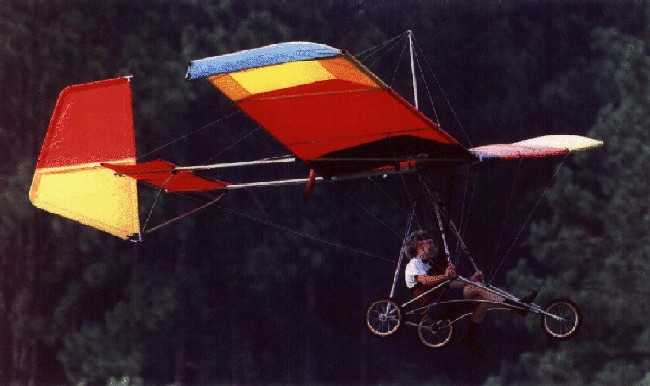 |
Wizard ultralight
ultralight, aircraft, amateur built, experimental,
homebuilt aircraft.
|
|
|
 |
|
 |
|
 |
|
 |
|
 |
|
 |
|
 |
|
|
 |
 |
 |
|
|
|
|
|
|
Ultralight News Web Magazine.
You may link to these pages or print
them out for your own personal use.
No part of this
publication may be copied or distributed, transmitted, transcribed,
stored in a retrieval system, or translated into any human or computer
language, in any form or by any means, electronic, mechanical,
manual, or otherwise, without the written permission of UltralightNews.
By copying or paraphrasing the intellectual
property on this site, you're automatically signing a binding contract
and agreeing to be billed $10,000 payable immediately. Copyright UltralightNews Email
|